The first time I had a somewhat deeper contact with Morse code was when I read the book The Information by James Gleick. This book is a delight for anyone who wants to learn more about communication and, as the title highlights, information. In a first and brief moment, the book jumps ahead to its final topic, Claude Shannon’s Information Theory and how it is the foundation of all our telecom technologies. Right after, the book goes back in time to communication through drums and then advances to the subject of this post, Morse code.
Morse code, unlike other encoding schemes that spread naturally, was designed. From its very conception there was a concern with compressing the message: the most frequent letters received the shortest sequences. After it was adopted, code tables emerged to reduce whole sentences to short sequences of letters. QSL?*
To this day Morse code is highly widespread through CW modulation, thanks to its great energy efficiency for transmitting messages worldwide and its practicality. Until recently, Anatel required learning it for promotion to the B and A amateur radio classes; the topic was removed and now learning it is optional.
The resources for learning Morse are extensive, but recently something charmed amateur radio operators: a little board that let you practice while already showing the path to follow:
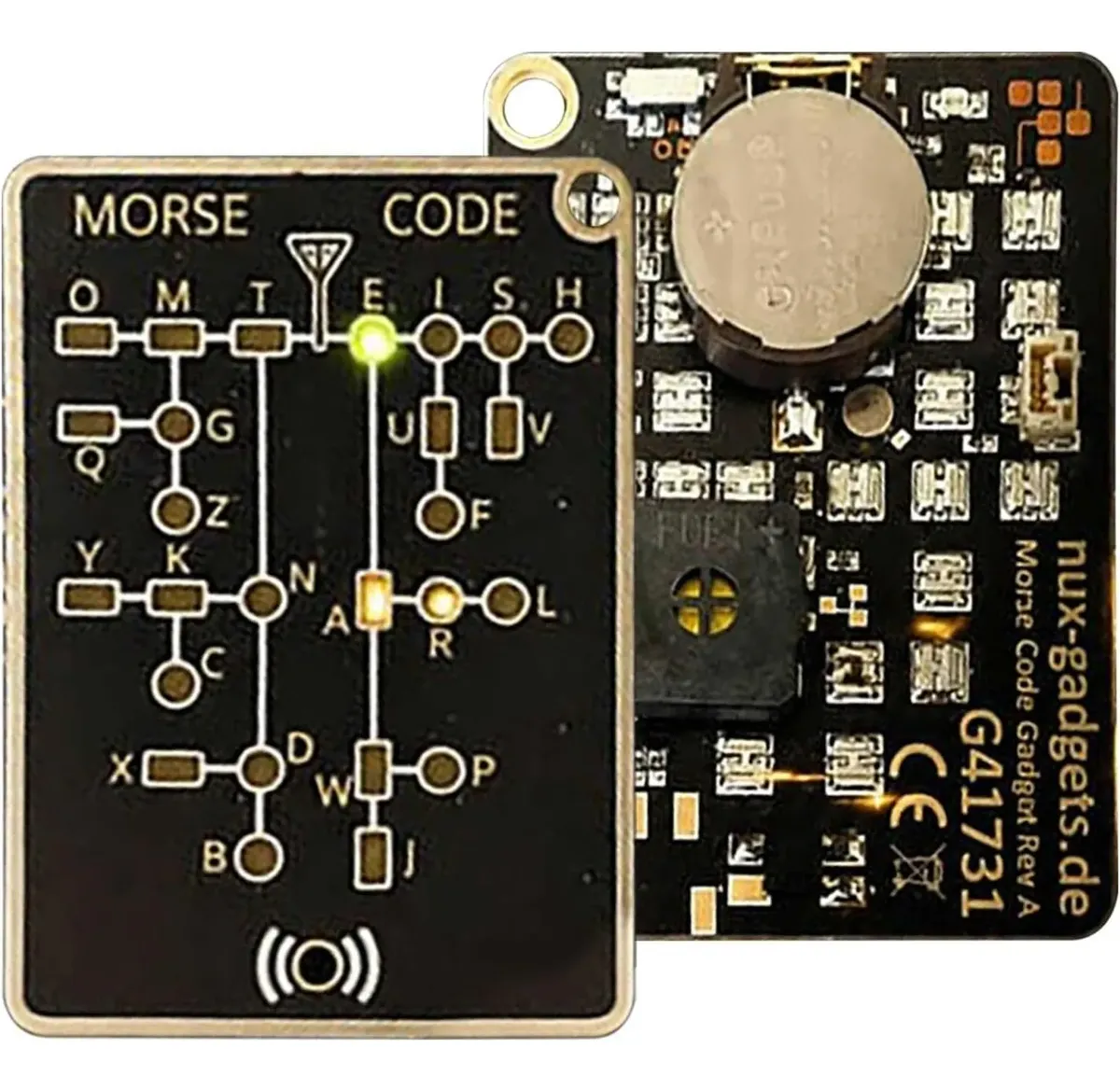
The project is amazing and definitely worth acquiring for anyone interested in Morse who wants to occasionally play with this keyer. However, it’s still not that accessible. So, based on the Morse tree, we now have a small tool to practice the code in a simple and practical way. The tool is not meant to replace any other learning path; on the contrary, it helps to complement and to make day-to-day use of Morse easier.
To access it, check out Yet another Morse trainer
If you have improvement suggestions or find any bugs, send an e-mail to the
contact available on the About page.
*QSL: do you confirm receipt of the message?